Electric vehicles are capturing an ever-increasing market share, which leads to the rapid coming up of the infrastructure supporting them. Among the infrastructure developments, public stations are quite noticeable and have been seen to make a big impact on the range and vehicle performance of EVs. The idea of EV charging stations is, therefore, very important to both present and future EV owners.
Categories of EV Chargers
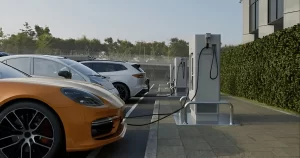
Electric vehicle charging stations are classified according to the type of current they provide and their charging speed, as follows:
1. AC Chargers
These chargers deliver AC power, which is then transformed into DC by the vehicle’s onboard charger in order to fill the battery. They are variedly put in industrial and domestic use cases. The reliability and efficiency of AC charging stations are perhaps the main qualities that make them the first choice for EV drivers.
2. DC Chargers
DC chargers draw the supply of the power from a battery to the vehicle’s battery without going through the onboard converter. This, in turn, incites the charging speed allowing for fast delivery. The technology is mainly used in installations such as large supermarkets, parking lots, shopping malls, and hotels, ensuring proper service for EVs and, there, users.
How Public EV Charging Stations Operate
Public EV charging stations are on a mission to provide EV drivers with reachable and efficient charging services. Check the next lines to get an idea of what they usually do:
1. Electricity Source
Public charging stations are connected to the local power grid to be able to charge EVs on them. The DC and AC power is provided by the stations depending on the design, while the car’s converter is used for AC stations and the stations are normally equipped with converters for DC charging.
2. Charging Connectors and Compatibility
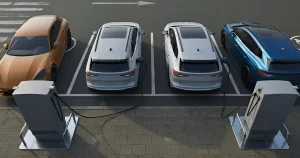
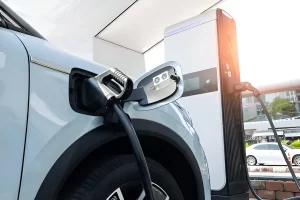
Charging stations consist of plugs that adhere to different international standards, verifying the compatibility of a huge range of electric cars. The usage of some standards like the Combined Charging System (CCS) and CHAdeMO, among others, is further evidence that EV owners have easy access to charging facilities through standardization.
3. User Authentication and Payment
The charging of cars is started by users confirming their identity either by point of contact technology like RFID cards, smartphone applications, or just mobile payment solutions without contact of their smartcards. This electronically safeguards the transaction and ensures the proper measurement of the consumed electricity by the user. One of the advanced plugins is ‘Plug and Charge’ which enables automatic checks for the charger and also makes the payment process automatic and easy.
4. Charging Process
Afterward, the station is authorized to begin the charging process by establishing a connection with the vehicle. The station is partially responsible for the regular checkup of several variables, including the battery level, and the correct flow of current to the car.
5. Monitoring and Support
Many public charging stations provide real-time monitoring of their performance through centralized management systems which makes it convenient for the operators of the stations to identify issues on time and to help the users who are in trouble. For example, CELECTRIC MOBILITY provides around-the-clock, 7 days a week, technical support to ensure its clients enjoy continuous charging.
Benefits of Public EV Charging Stations
Public EV charging stations contribute significantly to the electrification of transportation, offering several advantages:
1. Greater Range
Electric vehicles can only go so far without needing to be recharged. In public stations, they can charge for longer with no concerns about depletion of the battery. This is a clear benefit for people who cannot install their own charging equipment at home.
2. Convenience
Strategically set in malls, at workplaces, or in parking lots, these charging stations provide the opportunity for people to charge their vehicles while doing things like shopping, working, or visiting the doctor, thus maximizing their time and convenience.
3. Urban EV Support
Public charging infrastructure is essential for promoting the proliferation of electric vehicles in cities where residents do not have a parking space for home charging. In this light, they are looking into alternative sustainable technologies like using existing infrastructure such as lampposts as charging points.
4. Environmental Contributions
Eco-friendly vehicles are significantly encouraged to be used in the transportation sector with the help of public EV charging stations. This results in a significant drop in greenhouse gases and reduced oil dependency, contributing to a cleaner environment.
Challenges and Considerations
While public EV charging stations play a crucial role in electric vehicle adoption, several challenges must be addressed:
1. Infrastructure Development
To have a widespread network of charging points, different stakeholders need to collaborate on the expansion of the network. Upgrading the power grid remains a major challenge for this development.
2. Standardization
Different standards for charging may complicate the effective charging of any electric car. Regulators are focusing on developing protocols for compatible charging across various networks and car models.
3. User Experience
Making charging stations customer-friendly through simple and clear user authentication and payment methods will encourage widespread adoption. Additionally, providing real-time data updates would improve user convenience.
4. Maintenance and Reliability
Regular maintenance is crucial for ensuring safe and secure charging stations. Operators must establish strong support systems and quickly address technical issues to maximize station availability and reliability.
By addressing these challenges, public EV charging stations can continue to support the growing adoption of electric vehicles, making transportation more sustainable and efficient.
Also Read this blog: The Role of AC Chargers in EV Infrastructure